
Beyond footfall: where retailers really outperform in London
Card spend data reveals where London retailers actually outperform their own estates. From high-conversion rail hubs to high-productivity retail parks, discover the locations driving real growth.
16th February 2026 • GeoData

Retailers have long relied on familiar signals to judge location performance: footfall, demographics, tenant mix, catchment spend.
Useful, but blunt.
Our card spend data offers a more sophisticated measure of performance: it shows where retailers actually outperform their own estates, not just where they should perform well.
When we apply this lens to London, a clear pattern emerges.
The city's 10 strongest outperforming locations fall into three distinct Retail Place types, each offering very different strategic insights for retailers.
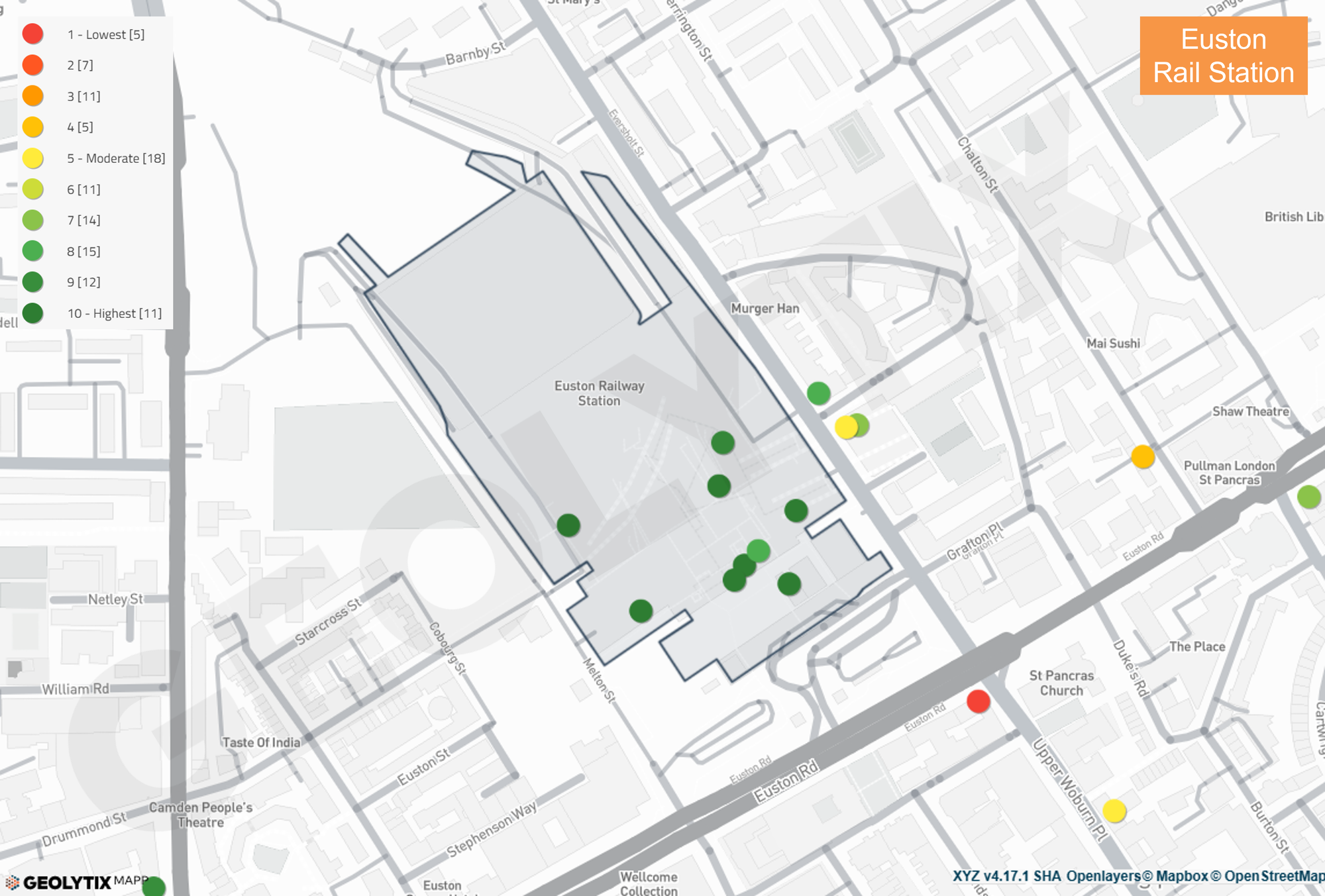
1) Rail Stations: intensity and impulse
London’s major rail hubs consistently rank among the top outperformers:
- King's Cross
- St Pancras
- Euston
- Waterloo
- Paddington
These locations combine extreme footfall intensity with a highly spend-ready customer mix. For many brands, they deliver trading levels significantly above estate averages, particularly in categories suited to convenience, gifting, food and premium impulse.
The Insight:
Rail stations aren’t just high-footfall locations, they are high-conversion environments. Unit-level data helps brands quantify that uplift and benchmark the true premium of station-based retail.
2) Retail Parks: unglamorous, but highly productive
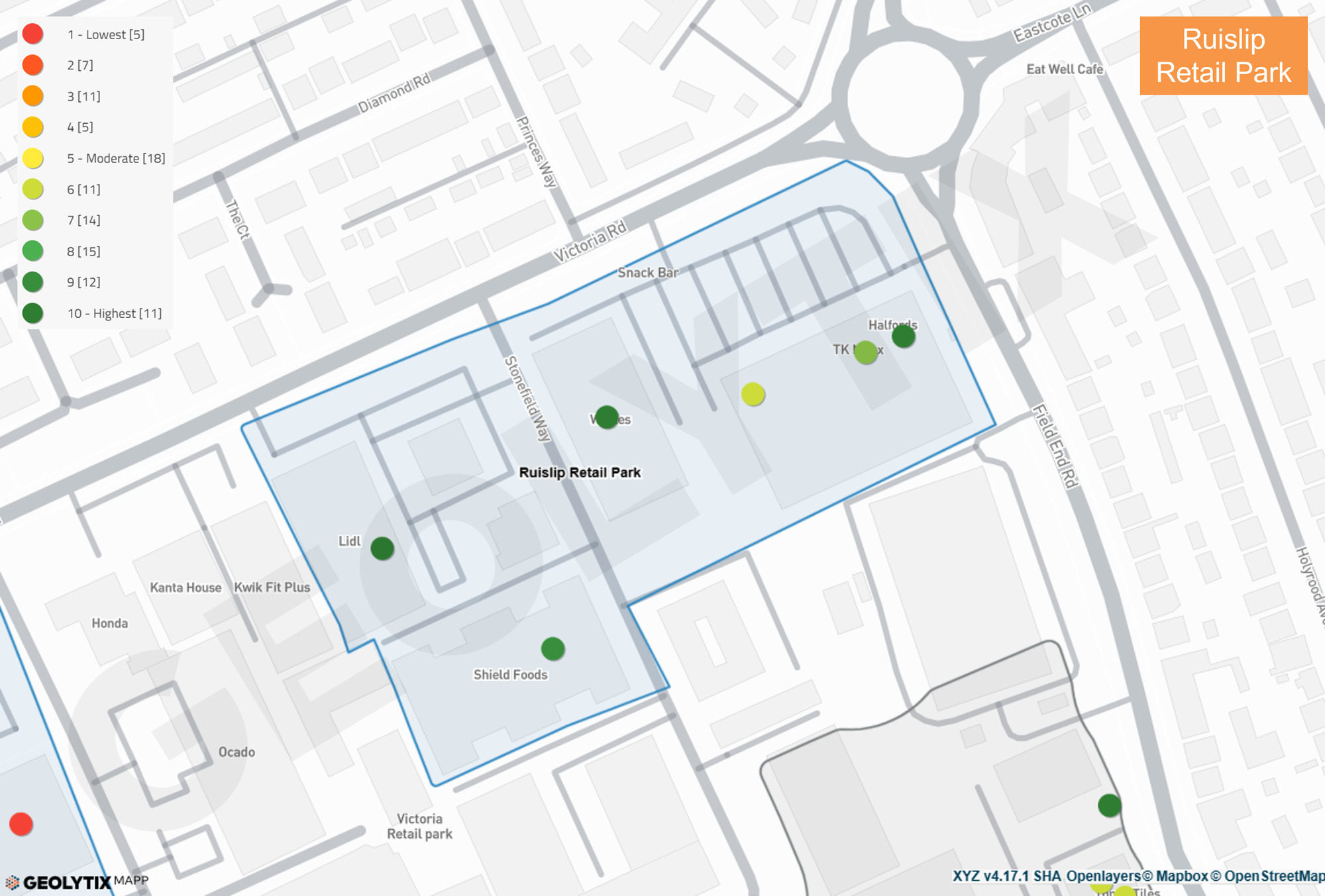
Some of London’s strongest outperformers are not in prime high streets or flagship malls, but in retail parks:
- Purley Way North Retail Park
- Ruislip Retail Park
- Tower Retail Park
These locations often fly under the radar in traditional location analysis.
Yet unit-level performance data shows that categories like DIY, home, furniture and bulky goods consistently trade exceptionally well here.
The Insight:
Retail parks can deliver some of the most reliable and scalable performance in an estate, especially for space-hungry or destination-led categories. Data-driven benchmarking helps brands recognise value where traditional metrics might undervalue it.
3) Shopping Centres: concentrated demand
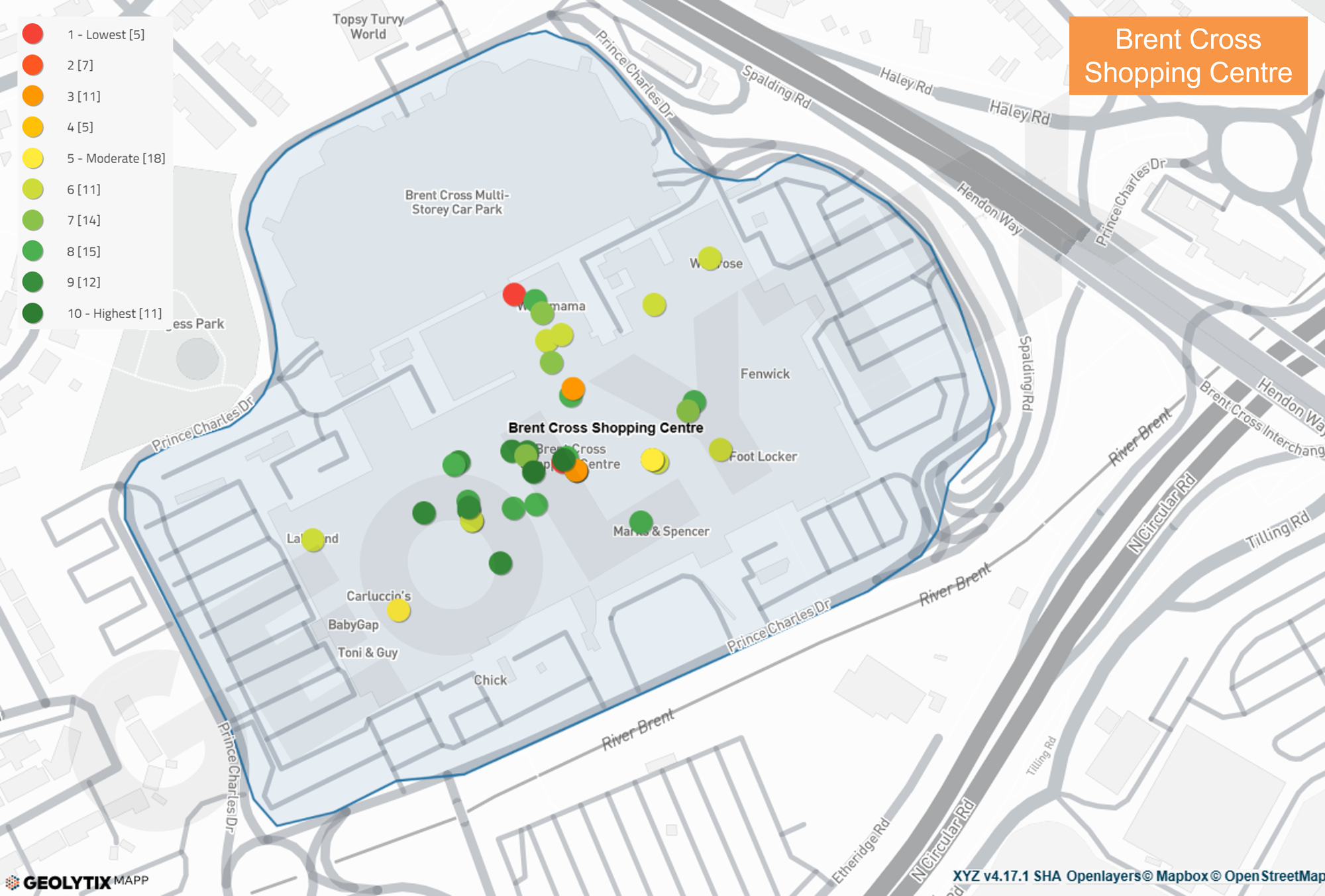
Major shopping centres also stand out:
- Westfield Stratford
- Brent Cross
These environments combine scale, brand adjacency and customer dwell time, creating pockets of sustained outperformance for fashion, beauty and lifestyle brands.
The Insight:
Not all centres are equal. Unit-level data reveals which centres genuinely drive above-estate performance, rather than simply looking strong on paper.
Why this matters
London isn’t a single retail market, and performance isn’t driven by one factor.
By moving beyond proxies and analysing real trading outcomes, retailers can:
- Identify micro-locations where they are most likely to outperform
- Compare fundamentally different Retail Place types on a like-for-like basis
- Challenge assumptions about where their best opportunities really lie
- Make expansion and optimisation decisions with defensible evidence
In short, sophisticated performance measurement reveals opportunities that traditional location analysis simply can’t see.
Interested in more detail?
Click this link to book a demo of our UK banking data platform and start de-risking your site selection today.
Author: Ben Purple, Director at GEOLYTIX
Photo by Benjamin Davies on Unsplash

Related Posts
-

Your Complete Guide to UK Banking Location Data
An overview of the uses of banking location data and how it can support mapping, analysis and planning across a range of projects.
Published 18th November 2025 • Tags open-data, geodata
-

From Footsteps to Forecasts: The Power of Small Area Footfall
Discover how Geolytix footfall data can transform the way you understand your locations and identify where to open next.
Published 30th May 2025 • Tags mobility, geodata
-

Grocery Growth: UK Supermarket and Convenience Openings in 2024
2024 saw major shifts in UK grocery retail with bold expansions, innovative formats, and strategic closures shaping the industry.
Published 31st December 2024 • Tags open-data, geodata